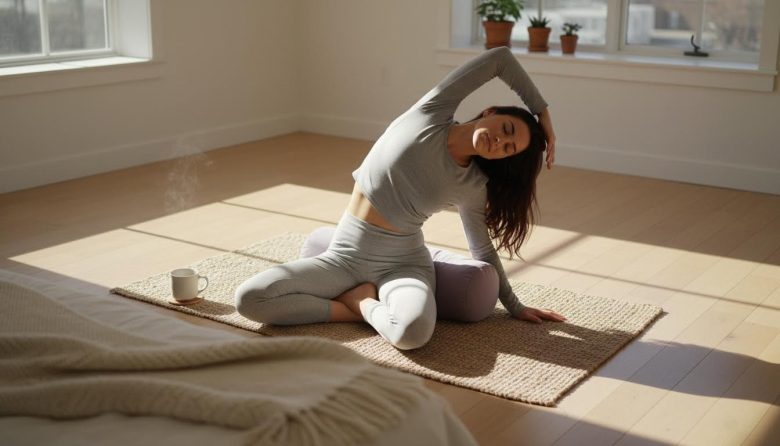
Morning light slips through the curtains. Your body stirs from sleep, perhaps a little stiff. Instead of jumping into the day, imagine pausing for a few gentle stretches. This plan eases you awake, softening muscles and settling your breath with simple movements.
Think of Sarah, who used to rush out the door tense and hurried. One morning, she tried lying still for a breath or two. Now, her days start calmer, her back feels supported. You can begin the same way—no mat needed at first.
These stretches flow like a quiet river, from bed to standing. They open your chest, loosen hips, and invite ease. Pick one to try tomorrow. Be kind if it feels new.
Waking with a Soft Breath Invitation
Lie in bed, eyes soft or closed. Place one hand on your belly. Feel it rise and fall with each breath.
Inhale for a count of four—slow, through your nose. Let your belly expand gently. Exhale for four, softening your shoulders. Repeat three times.
This simple breath wakes your body without jolt. It settles your nervous system, like a friend whispering good morning. Owen here—I’ve shared this with friends who wake groggy; they notice clearer thoughts right away.
Make it a habit: Do this every morning before feet touch floor. Track by noting how your breath feels after a week—deeper? Easier? No pressure, just notice.
From here, your body softens for movement. This breath supports the stretches ahead, linking rest to rise.
Settling Your Space for Quiet Unfolding
Roll out a mat or blanket near a window. Let morning light touch the space softly. Keep it simple—no perfect setup needed.
Place a mug of warm water or tea nearby. Dim any harsh lights. Your spot invites unfolding, calm and close.
For a calmer space overall, weave in ideas from the Home Organization Routine for Calm Spaces. It helps keep your mornings free of clutter. Sarah cleared a corner; now her stretch spot feels like a retreat.
Track progress lightly: After seven days, jot how the space feels. Welcoming? Peaceful? Adjust as you like. This prep takes two minutes, sets a gentle tone.
With space ready, transition smoothly to the next ease. Your body waits, breath steady.
Easing Your Spine from Rest to Rise
Sit up slowly on the bed’s edge. Swing legs to floor, feet grounded. Inhale tall, exhale to round your back gently.
Move to all fours on your mat. Inhale, arch your back softly—cow pose. Exhale, round it—cat pose. Flow five breaths, eyes soft.
This rhythm wakes your spine without strain. It supports the lower back, eases overnight tightness. I remember a client, Mark, who felt pins after sleep; this softened him in days.
Hold each for three breaths if you like. Soften knees if needed. From here, your core feels settled, ready for the flow.
This bridge pose links breath to full stretches. Notice how your breath deepens naturally.
Your Gentle Stretch Flow
These five steps build a 10-minute sequence. Move at your pace, 30-60 seconds each. Breathe fully—inhale lengthens, exhale softens. Modify as feels right; your body leads.
- Seated forward fold: Sit with legs extended, feet flexed. Inhale tall, exhale fold forward from hips. Let head hang heavy, breathe into hamstrings for five breaths. Soften knees if tight—ease releases tension here.
- Side body reach: Come to knees or sit tall. Reach one arm overhead, hand to opposite ear. Breathe side ribs open, three breaths. Switch sides. This lengthens your waist, supports steady breath all day.
- Heart opener kneel: Kneel with support under knees if needed. Hands behind, fingers out. Inhale lift chest, gaze soft up. Hold four breaths, shoulders ease. Opens your front body gently.
- Hip circle stand: Rise to feet, wide stance. Hands on hips, circle slowly clockwise five times, then counter. Inhale front, exhale back. Settles hips, lower back flows free.
- Full body shake: Stand tall, shake arms, legs, head lightly. Sigh out on exhales, 30 seconds. Releases any hold, invites lightness. End with a deep breath, smile soft.
This flow connects bed to movement seamlessly. Feel the progression—forward to open, low to stand. Owen’s tip: Pause between if your body asks.
Opening Hips and Shoulders with Care
After the flow, linger on hips. Sit cross-legged, one ankle over opposite knee. Lean forward gently on exhale, three breaths per side. Hips soften, energy settles.
For shoulders, clasp hands behind back. Inhale lift chest, exhale lower hands if possible. Five breaths. Circles arms forward and back after—small, slow.
Pair with a short walk outside. Feel ground under feet, breath fresh. This carries openness forward. Track one word daily: “loose”? “light”?
Breathing guide: Three deep breaths per side, nose in, mouth out optional. No rush—tight mornings ease with time. I guide groups this way; they share stories of easier chairs later.
These add depth without overwhelm. Transition now to your day, carrying this ease.
Carrying Morning Ease into Your Day
Mid-morning, pick one stretch: side reach at desk. Breathe into it, 30 seconds. Ties your start to now.
Build habits gently. After a good Sleep Prep Routine Starting at Dinner, mornings feel even softer. Stay hydrated with a Hydration Routine Throughout Your Busy Day to keep muscles responsive.
Track without pressure: Journal one felt word—”calm,” “open.” Review weekly, celebrate small shifts. Be kind if skipped; tomorrow renews.
Real-life: My neighbor Tom does cat-cow waiting for coffee. His posture improved, less ache by noon. You hold this potential.
Your day unfolds supported. This practice grows quietly, like morning light.
A Few Gentle Answers
Can I do this if I’m new to stretching?
Yes, absolutely. Start with 15-second holds, eyes closed, breath your guide. Build as feels natural—no comparison. Many begin here, find joy in the slowness. Listen to your body; it teaches pace.
What if I feel tight some mornings?
Tightness comes and goes—breathe deeper into it. Shorten folds, add pillows for support. Patience softens what force can’t. Owen’s note: Warm tea first helps many. Over time, mornings greet you gentler.
How long does the full flow take?
About 10 minutes, perfect before breakfast. Flow without clock if you like—let breath time it. Fits rushed days too; even three steps shifts your start. Short walks extend the calm.
Is it safe with back sensitivity?
Move within comfort only—skip arches if tender. Use props like folded blankets under knees. Slow wins here. If ongoing, a gentle teacher reassures. Your safety leads every breath.
Can I adapt for pregnancy?
Yes, beautifully. Sit or kneel more, use walls for support. Focus breath, shorten holds. Bodies change wisely—honor that. Share with your care circle if needed. Ease supports new life softly.