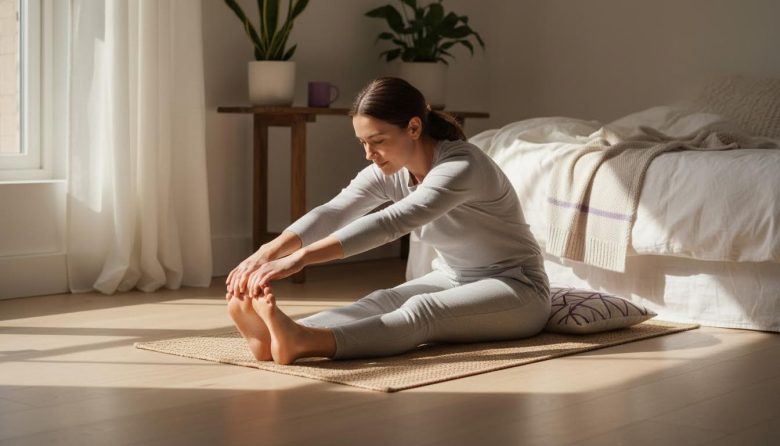
Picture a quiet morning. Sunlight filters through the window, touching your shoulders softly. You’ve spent the day before at a desk, and now there’s a gentle tightness there, asking for a moment of care.
I remember my own start. After long hours typing, my neck felt heavy. One simple stretch eased it, like a soft sigh for the body. Gentle daily stretching became my quiet support—not a task, but a way to settle body and breath together.
It’s not about perfect form or long sessions. It’s easing into small moments that soften tension and steady your day. You might notice calmer breaths or lighter steps. Settle in with me here. Try just one small stretch today, and let it unfold naturally.
These next sections offer a gentle path. We’ll sense your body’s quiet signals, find a simple space, move through easy steps, and weave it into your days. No rush. Just soft support for what feels right.
Sensing the Quiet Call from Your Body
Your body speaks softly. Tight shoulders after sitting, or stiffness in the morning—these are gentle nudges. They invite you to pause, without any pressure to fix everything at once.
Notice during your coffee break. Feel your breath rise and fall. Is there a spot that holds steady, waiting for release? Tuning in like this builds a kind awareness.
Try this now: Inhale for a count of four. Hold softly for four. Exhale slowly for six. Let your shoulders drop. This breath alone softens the call from your body.
Everyday signs appear in small ways. A yawn that lingers, or arms that feel heavy by evening. Listen without judgment. It’s the first step to gentle care.
Over time, this sensing becomes natural. You’ll catch the quiet call earlier, easing in before tension builds. Be patient with yourself—it’s a soft habit forming.
Settling into a Simple Space at Home
Choose a spot that feels calm. Near a window with morning light, or a quiet corner on the floor. No need for special gear—a folded towel works as a mat.
Wear loose clothes that move with you. Keep water nearby for a sip between stretches. Let the space support you, like an old friend.
Here’s a small checklist to settle in:
- Soft surface, like a rug or blanket.
- Loose, comfortable clothes.
- A glass of water close by.
Imagine starting here each day. The light softens your edges, inviting ease. If evenings call, try herbal tea routine for evenings nearby for added calm.
This simple setup keeps things light. No rearranging your home—just a breath of space for your body. Return to it when it feels right.
Easing Through Your First Four Gentle Steps
These four steps form a soft framework. Begin with five minutes, holding each for 20 to 30 seconds. Breathe steadily—inhale ease, exhale release. Do them seated or standing, as your body prefers.
Move slowly, one at a time. After meals or desk time, they settle digestion and tension. Let’s walk through them together.
- Pause and breathe with neck rolls. Sit tall. Inhale, roll your head gently to one side, ear toward shoulder. Exhale back to center. Switch sides. Feel the neck soften, breath guiding the motion. Great for morning stiffness.
- Reach and release with arm opens and side bends. Extend one arm across your chest, hug it softly with the other. Breathe into the shoulder. Then, reach one arm overhead, bend sideways gently. Loosen the sides, like unfolding after sleep. Real-life ease: after driving.
- Fold forward softly. Seated, hinge at hips, let arms drape toward feet. Bend knees if needed—no deep fold. Breathe deeply, releasing the back. Standing works too, knees soft. Ties to post-lunch calm, settling the spine.
- Settle with rest. Come to child’s pose: knees wide, sit back on heels, arms forward. Or legs up against a wall. Close eyes, breathe slow. This final rest quiets the whole body, perfect before bed.
Visualize your breath: Inhale lifts the chest softly. Exhale lets go deeper. Repeat the cycle twice through. Notice how each step flows to the next, building quiet support.
Example from my days: After emails, these steps take tension from my upper back. You might feel arms lighter, breath fuller. Adjust as needed—shorten holds if new.
Practice daily, and they become familiar friends. No perfection required. Just this gentle sequence, easing your body home.
Softening into Mornings or Evenings
Link stretches to natural rhythms. Mornings greet the day with looseness; evenings release the hours held. Five minutes suffices—short and steady.
Try with morning tea, or wind down before lights dim. A bedside note tracks it simply: date and one word, like “easier.” No apps, just your quiet record.
Evenings pair well with calm habits. Blend in a bedtime routine to reduce nighttime worry, stretching as the gentle start. Breath slows, body settles for sleep.
Mornings bring light to your moves. Stand by the window, follow the sun’s path with side bends. It softens the wake-up, carrying ease into your hours.
Let it fit loosely. Skip if tired—return tomorrow. This weaving builds without force.
Noticing Small Shifts Day by Day
Shifts come quietly. Looser joints after a week, or breath that reaches deeper without effort. Walks feel lighter, stairs less effort.
I noticed after two weeks: shoulders stayed open during calls. No big changes, just steady softness. Your body shows in small ways—pants looser at the waist, sleep sounder.
Awareness grows gently. Jot one note nightly: “Neck felt free today.” Be kind if a day slips—gently resume.
These signs encourage without pressure. Calmer breath during stress, or a sigh of release. Track inwardly, or with that simple note.
Day by day, the practice supports. Tension eases, presence deepens. Celebrate softly—these are your quiet wins.
Kind Reminders for Your Steady Flow
Slips happen. Tired evenings or busy mornings pull you away. Return without self-talk that’s harsh—just pick up softly.
Pair with short walks. Stretch after, feeling legs and back settle. Or use household calm, like in relaxation tips using household items, for easy access.
Common nudge: Set a phone chime for tea time, or window light as cue. Keep it light—no rigid schedule.
Pick one step tomorrow. Notice how it feels in your body. Be kind to yourself along the way—this is your gentle flow.
Steady practice brings deeper calm. Shoulders soften, days steady. You’ve started—let it unfold with care.
FAQs
Is gentle stretching safe if my muscles feel tight?
Yes, these moves ease in slowly with breath. Stop at any sharp pain, and build over days. Your body knows its gentle limits—listen closely.
How much time should I set aside each day?
Five to ten minutes fits most days easily. Let it grow as feels natural, without set rules. Short sessions support steady flow.
What if a stretch feels uncomfortable?
Soften the range right away, or step past it. Bend knees more, hold shorter—your comfort guides. Ease returns with practice.
Do I need any mats or props?
No special items required—a floor spot or towel suffices. A folded blanket adds softness if it helps settle. Keep it simple at home.
How can I remember to stretch daily without pressure?
Tie it to a calm moment, like after tea or by the window. A bedside note nudges kindly, no alarms needed. Habits form softly this way.