I remember the first time I truly paused amid the morning rush. Coffee brewing, kids chattering, my mind already spinning through the day’s to-dos. One afternoon, exhausted from it all, I sat on the living room floor for just two minutes. Eyes closed, breath softening. That tiny shift brought a whisper of calm I hadn’t felt in weeks.
Life pulls us in every direction, doesn’t it? Yet these small, quiet moments can anchor us. They’re not about perfection or hours of silence. They’re gentle invitations to settle into lasting ease, one breath at a time. If you’re ready to weave this in softly, let’s walk through it together.
Starting a meditation habit doesn’t need grand changes. It’s about easing in with kindness, letting calm build like morning light through a window.
Easing Into Your First Quiet Moments
Begin where you are, with brevity as your friend. Long sessions can feel daunting, but two minutes supports a gentle start. It lets your mind soften without resistance.
I once tried forcing thirty-minute sits early on. My thoughts raced like leaves in wind. Switching to short pauses changed everything—they invited calm to linger naturally.
Picture this: a quick settle before lunch. Breath in, breath out. No rush. This simplicity builds the habit, turning fleeting peace into a daily rhythm.
Finding a Soft Spot in Your Day
Natural pauses exist in your routine, like the soft light of dawn or the hush of evening. Mornings often suit me best, after a warm drink settles my start. Evenings unwind the day’s knots gently.
Try linking it to something familiar. After brushing your teeth, or before bed. No need to carve out extra time—let it nestle in effortlessly.
If afternoons call, pair it with a short walk. As you explore Top 7 Breathing Exercises for Beginners, notice how these moments align, supporting your quiet practice without strain.
Creating Your Gentle Haven at Home
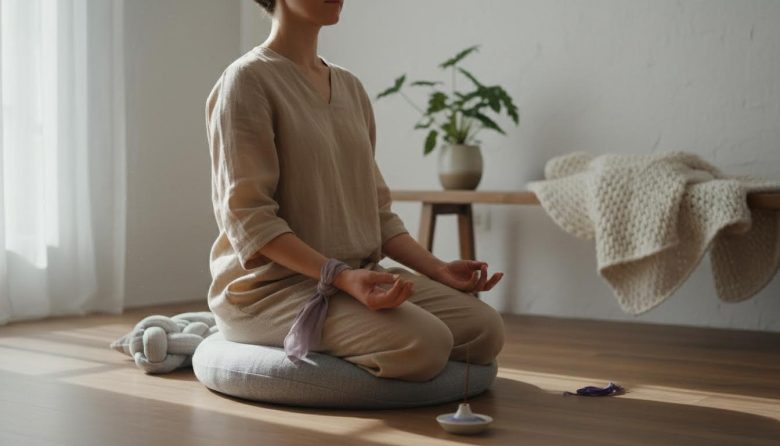
Your space needn’t be elaborate. A corner with a cushion or favorite chair invites comfort. Soft light from a window, perhaps a light blanket nearby.
I draped a shawl over my reading chair years ago. It became my haven—no more, no less. Add a plant or candle if it pleases, but keep it simple.
The key is familiarity. Sit where your body relaxes naturally. This eases you into the practice, letting calm arise from ease rather than effort.
Four Gentle Steps to Settle In
These steps offer a soft path to begin. They’re straightforward, meant for daily ease. Follow them loosely, with patience for yourself.
-
Sit comfortably, letting your eyes soften or close gently. Spine easy, hands resting in your lap. Feel the support beneath you.
-
Notice your breath’s natural rise and fall. Chest or belly moving softly, like waves on a calm shore. No changing it—just watching.
-
When thoughts drift—and they will—return kindly. Like guiding a leaf back to the stream. No judgment, just a gentle nudge.
-
End with a quiet thank you. To yourself, to the moment. Open your eyes slowly, carrying that stillness forward.
Practice this sequence daily. It builds quiet strength, one soft return at a time. Over weeks, you’ll notice the ease deepening naturally.
Softening Doubts Along the Way
A wandering mind is the most common whisper of doubt. It feels like failure, but it’s simply the practice unfolding. Thoughts come and go—your return is the anchor.
Early days, mine buzzed with grocery lists and worries. I persisted with short sits, kindness my guide. Gradually, spaces of stillness emerged.
If sessions feel too brief, that’s fine. Extend only when ready. Pairing with prepared nourishment, like in How to Prep Light Meals in Advance, supports steady energy for your practice.
Letting Small Wins Build Quiet Strength
Celebrate the tiny shifts—a deeper breath, a calmer pause. These stack into lasting calm, without fanfare. Note them mentally, or in a simple journal.
I began marking calendar days with a soft star. No pressure, just acknowledgment. Pair your sits with evening rituals, such as an Herbal Tea Routine for Evenings, to nurture the flow.
One breath at a time builds resilience. Be patient; strength grows in the quiet persistence. Your habit blooms from these small, kind wins.
Frequently Asked Questions
Is it normal for my mind to wander during meditation?
Yes, it’s a gentle part of the practice—return to your breath with kindness, like welcoming a friend back. This wandering happens to everyone, even long-time sitters. Over time, the pauses between thoughts lengthen naturally, fostering deeper calm.
How long should I meditate when starting out?
Two to five minutes eases you in; let it grow naturally as calm settles. Rushing longer can create resistance, so honor your pace. Many find joy in building from these seeds of stillness.
What if I miss a day—does it ruin the habit?
Not at all; be kind to yourself and return tomorrow, one soft moment at a time. Habits thrive on consistency laced with grace, not perfection. A single return reinforces the gentle rhythm more than flawless streaks ever could.
Do I need special tools or apps?
Your breath is enough; a simple timer supports without overwhelming. Apps can guide if desired, but starting bare invites true presence. Keep it minimal to nurture inner ease over external aids.
Can meditation help with daily stress?
It softens tension over time, offering a steady anchor amid life’s flow. Regular pauses build resilience, easing reactivity to daily pressures. Many notice clearer responses and quieter nights as the practice settles in.
Pick one step tomorrow—perhaps that first comfortable sit. Be gentle with yourself along the way. Your calm is waiting in these small moments.